


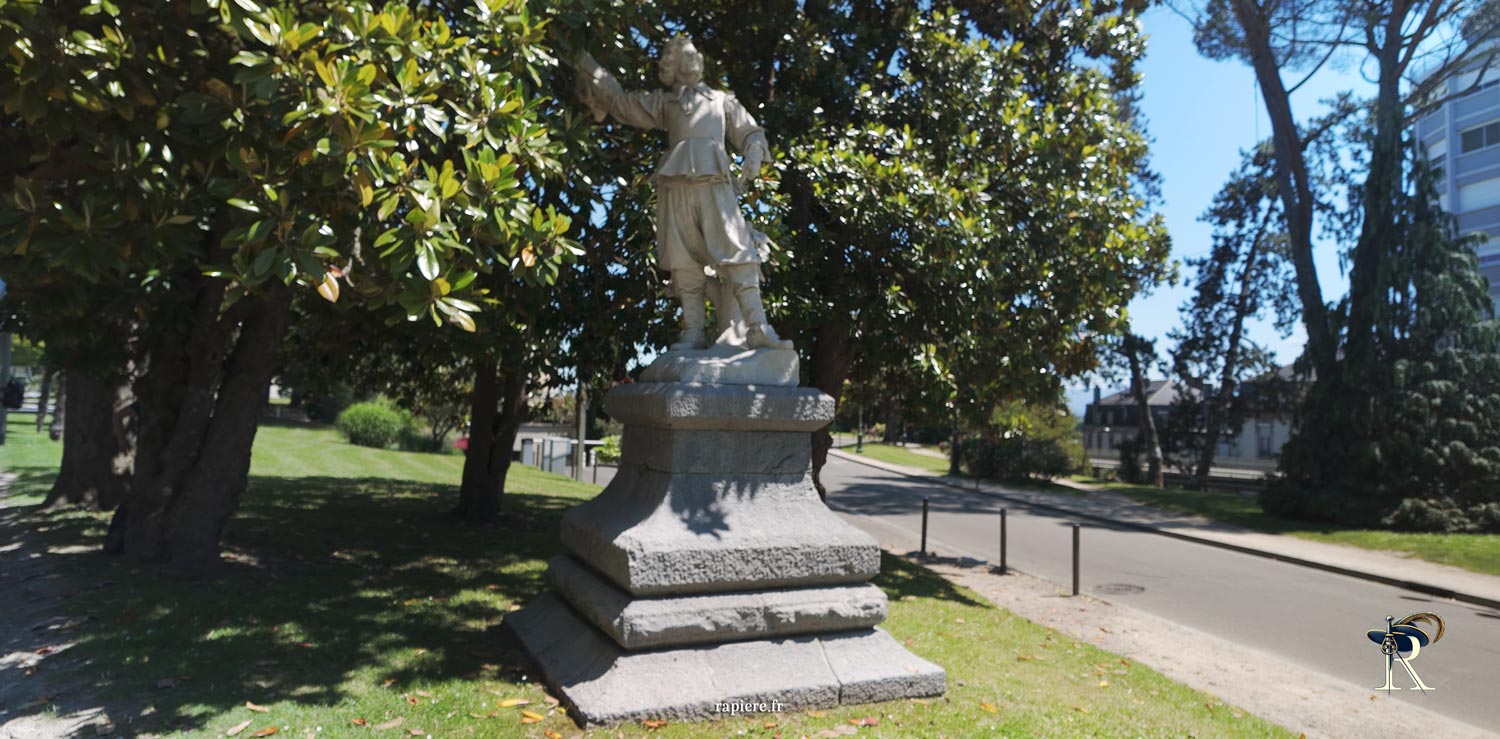
“Salut noble Béarn” statue in Pau (64, France)

Statue ‘Hail, noble Béarn’ Allées Gérard de Nerval, Parc Beaumont 64000 Pau (France)
Coordinates: 43.294636445000144, -0.3638666509665903
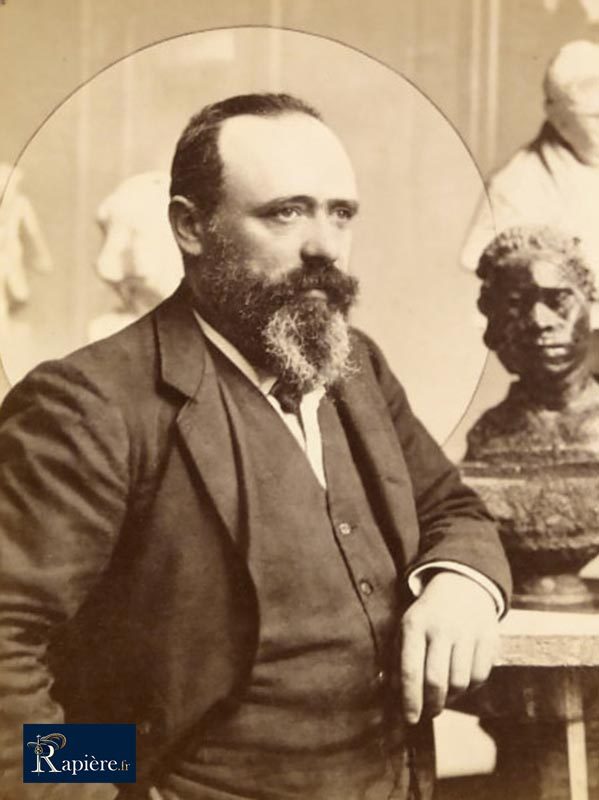
In 1901, the town of Pau decided to pay tribute to the cadets of Gascony by inviting the sculptor Edmond Desca, gold medallist at the 1889 Universal Exhibition, to create a marble statue entitled ‘Salut, Noble Béarn’. It is located near the Parc Beaumont.
The statue ‘Hail, noble Béarn!’ in Pau
Pau, the historic capital of Béarn, is situated in south-western France, at the foot of the Pyrenees and close to Spain. Known throughout the world as the birthplace of King Henry IV, Pau grew up around its medieval castle before becoming, in the 19th century, a health resort much favoured by the European aristocracy. The town also has a strong Béarn identity, deeply rooted in French military history. Many of the King’s Musketeers hailed from Béarn and neighbouring Gascony, regions renowned for their fiery-tempered men-at-arms. This collective memory explains the presence, in Beaumont Park in Pau, of a statue evoking the world of the Musketeers: ‘Hail, noble Béarn!’, a work long mistaken for a depiction of d’Artagnan or even Cyrano de Bergerac.
The sculptor of this work is Edmond Desca, a late 19th-century artist from Gascony who specialised in monumental and academic sculpture. Trained in the fine arts tradition, Desca regularly takes part in the Salon des Artistes Français held at the Palais des Champs-Élysées in Paris. In 1899, as work on the new Beaumont Park and the Palais d’Hiver in Pau was drawing to a close, the city commissioned the artist to create a statue to adorn the public gardens. Presented as a special exhibition at the Fair under the title “Hail, noble Béarn!”, the work was commissioned by the State with financial support from the Pau City Council. Desca then performs a move inspired by the world of the Gascon musketeers: a gentleman in period costume from the time of Louis XIII, with a rapier at his side and holding his hat in his hand in a gesture of salute to his homeland.
Erected in 1901 in Beaumont Park, the statue entitled ‘Hail, noble Béarn!’ is carved from Carrara marble and stands approximately 2.5 metres tall. The work depicts a musketeer with a haughty bearing, dressed in a Louis XIII costume, embodying the romantic ideal of the gentleman from Béarn popularised in the late 19th century by swashbuckling literature. Although often mistakenly taken to be a depiction of d’Artagnan from the novel *The Three Musketeers* or Edmond Rostand’s *Cyrano de Bergerac*, the statue does not, in fact, represent any specific character. Rather, it is a heroic allegory of the musketeer spirit of Béarn and the Gascon spirit. Unveiled quietly on 27 August 1901 without any special ceremony, this monument remains one of Pau’s most iconic landmarks, evoking the world of the French Musketeers.
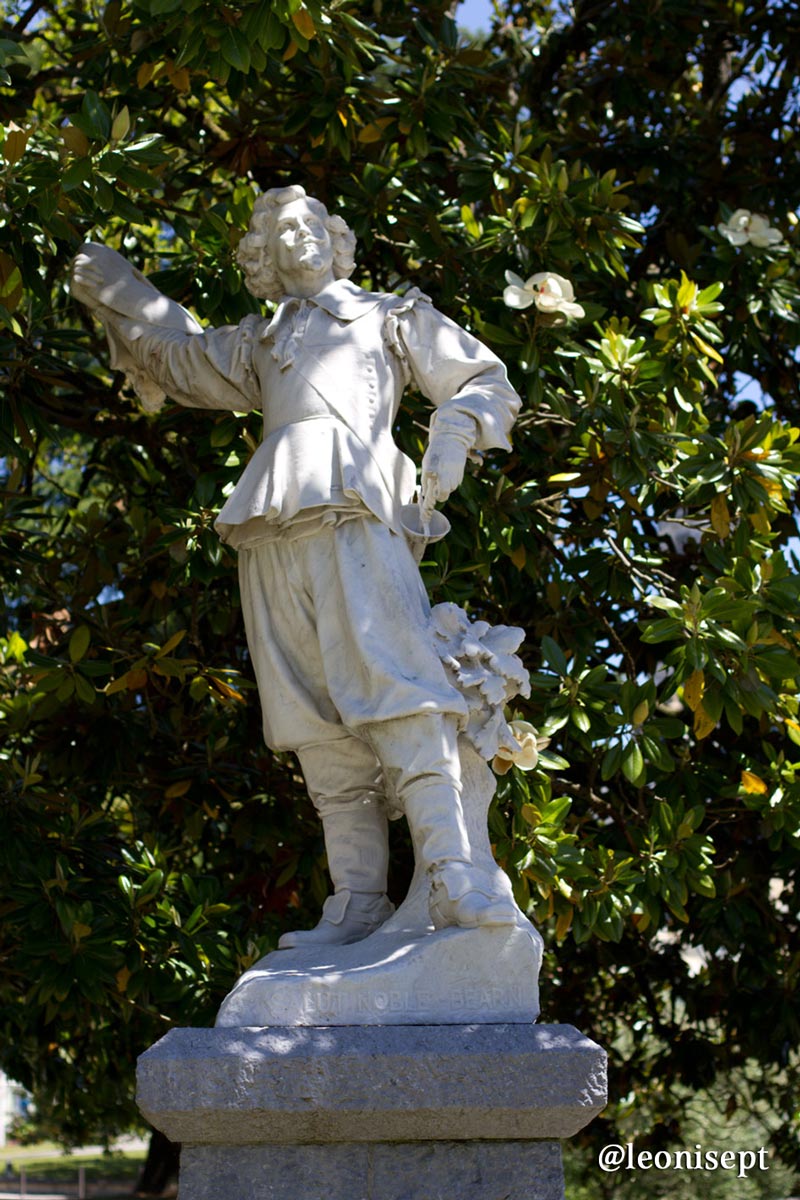
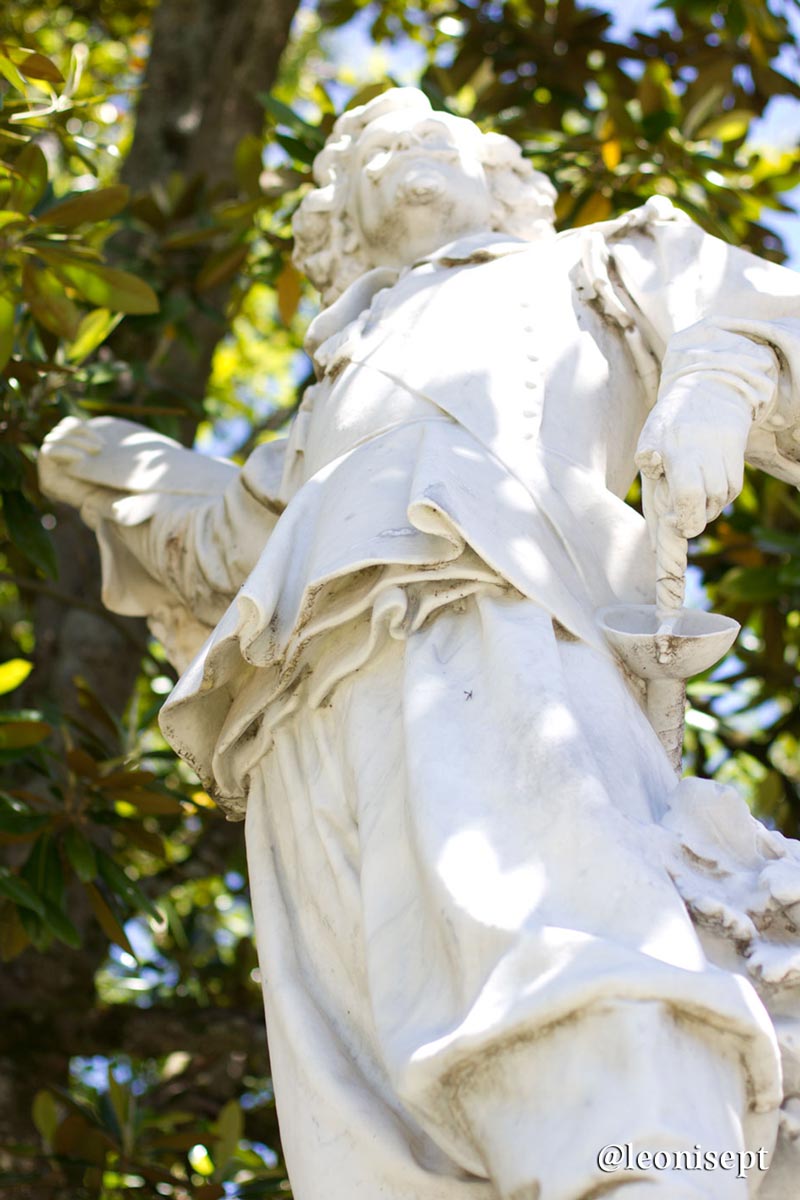
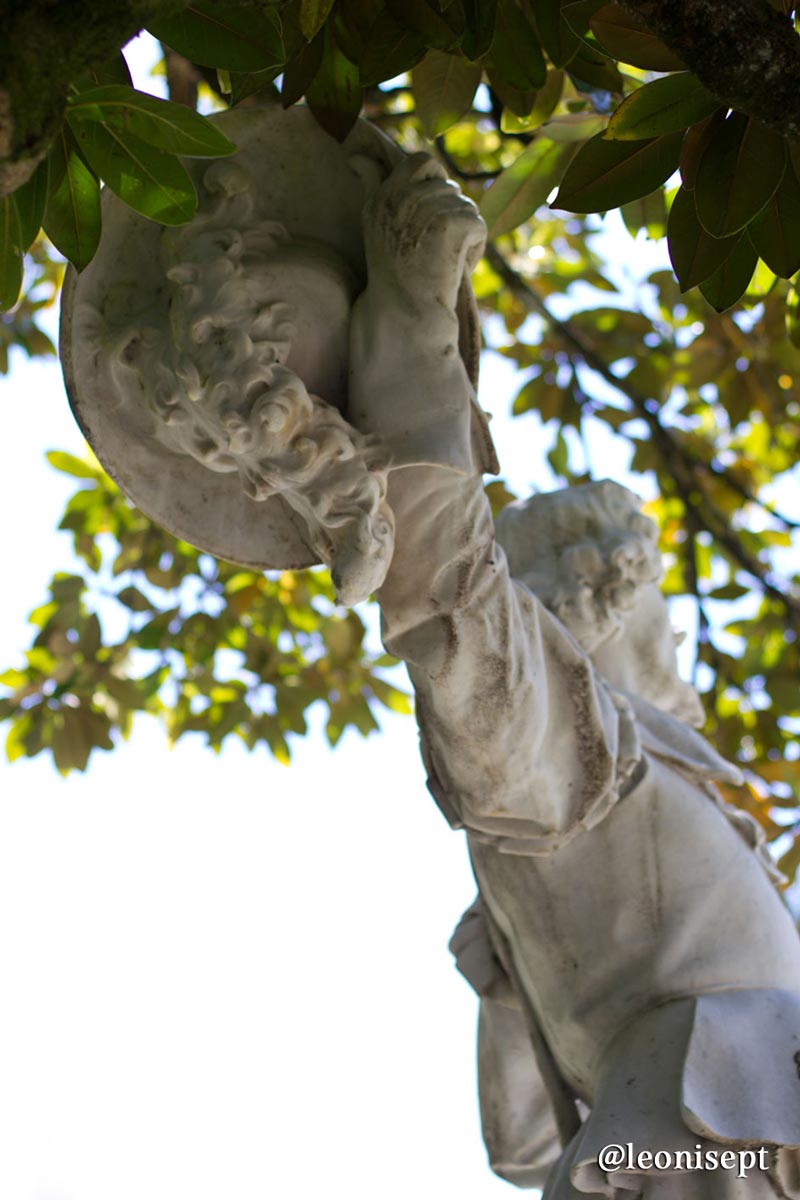
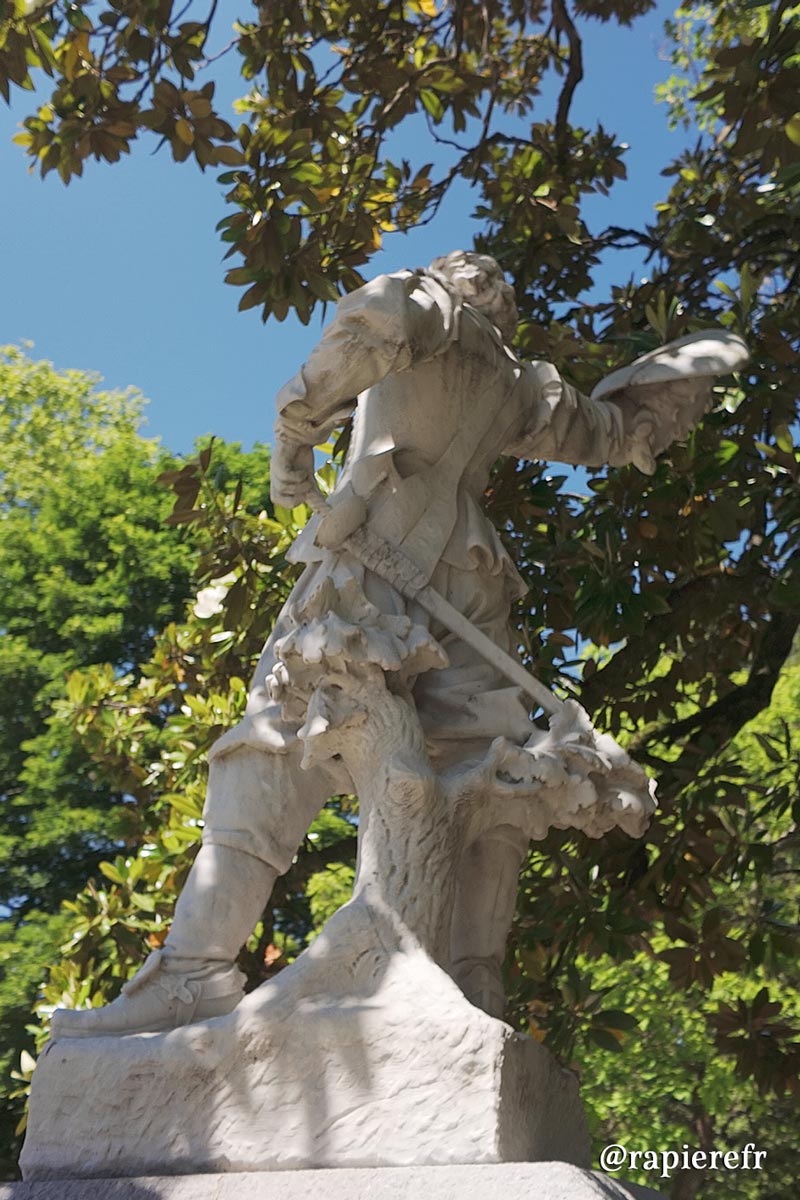
Photo credits: @leoniesept, @rapierefr