


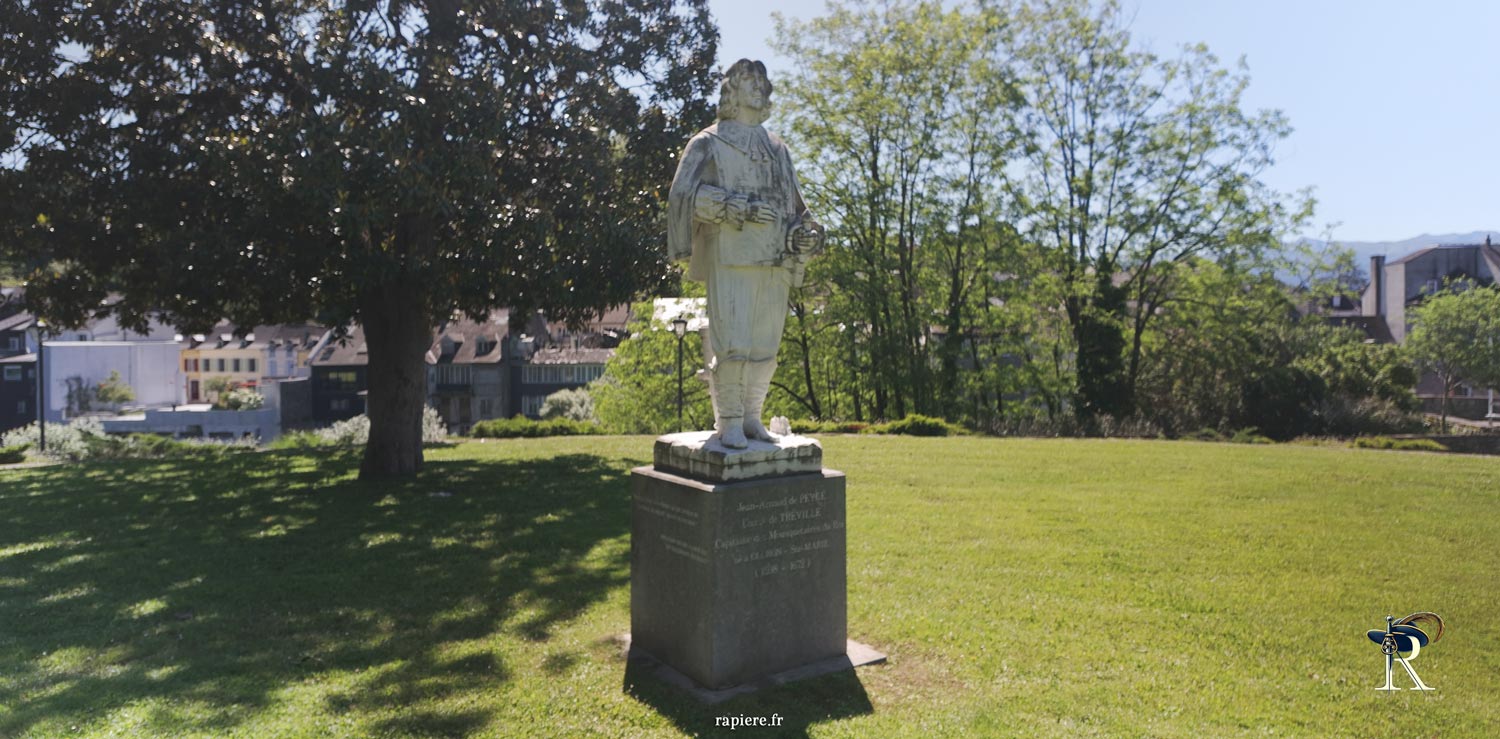
Statue of the Comte de Tréville (64, France)

Statue du comte de Tréville
Parc Bourdeu 64400 Oloron-Sainte-Marie (France)
www.oloron-ste-marie.fr
Coordinates: 43.19033238889894, -0.6104047680701479
The statue of Jean-Armand du Peyrer (or Peyré, Peyre), known as “Count of Tréville”, born in Oloron-Sainte-Marie and captain of the Company of Musketeers of King Louis XIII, stands in Bourdeu Park.
The statue of the Count of Tréville in Oloron-Sainte-Marie
Located in south-western France, at the foot of the Pyrenees, Oloron-Sainte-Marie is an ancient town in the Béarn region, in the Pyrénées-Atlantiques department (64). Straddled by the Aspe and Ossau rivers, the town is known for its rich historical heritage, its Sainte-Marie Cathedral—a UNESCO World Heritage Site on the Way of St James—and its strong connection to several key figures in regional history. Among them is Jean-Armand du Peyrer, better known as the Count of Tréville, whose memory holds a special place in the town. It is in Bourdeu Park, near the avenues named after him and not far from the tourist office, that a monumental statue has been erected in his honour, commemorating the deep connection between Oloron-Sainte-Marie and the world of the King’s Musketeers.
Jean-Armand du Peyrer, Count of Tréville, was born in Oloron-Sainte-Marie around 1598 into a Protestant family from Béarn. Loyal to King Louis XIII, he rose through the military ranks to become captain of the famous King’s Musketeers. A feared warrior and influential courtier, Tréville gained a formidable reputation at the French court in the 17th century. His energetic nature, his loyalty to the sovereign and his many duels all helped to forge his legend. The chronicler Tallemant des Réaux, moreover, attributes this flattering remark to Louis XIII: ‘Tréville: there is a man who will rid me of Cardinal Richelieu whenever I wish.’ However, it is chiefly thanks to Alexandre Dumas that the name Tréville has endured through the centuries. In the novel *The Three Musketeers*, published in 1844, Dumas portrays Monsieur de Tréville as the distinguished commander of the musketeers Athos, Porthos and Aramis, as well as the protector of the young d’Artagnan. Although fictionalised, this portrayal is based on a real historical figure whose legacy still embodies the spirit of the French musketeers today: bravery, loyalty and panache. Several quotations from the novel are, in fact, engraved on the plinth of the statue in Oloron-Sainte-Marie, including the one describing Tréville as a man who was ‘admired, feared and loved’.
The statue was created by the French sculptor Francis Clertan, a figurative artist renowned for his portraits and monuments dedicated to great historical figures. Born in south-west France, Clertan discovered his calling at a very young age after visiting the studio of the sculptor Robert Wlérick. Having settled in Béarn in 1978, he developed a resolutely classical body of work, working in clay as well as marble, bronze and alabaster. Winner of the City of Pau Sculpture Prize in 1998, he has received numerous public and private commissions in over thirty countries. His fascination with historical figures has led him, in particular, to create monuments dedicated to Jules Supervielle, Louis Barthou, John Paul II and the Count of Tréville.
Unveiled in 2004 on the Esplanade Bourdeu, the statue of the Count of Tréville stands tall on the edge of Bourdeu Park in Oloron-Sainte-Marie. Carved from Carrara marble by Francis Clertan, it depicts the captain of the Musketeers in a noble and haughty pose, a rapier in his hand. The monument bears several inscriptions referring to the historical and literary figure of Tréville, including quotations from *The Three Musketeers* and a phrase attributed to Louis XIII. The plinth also acknowledges the sponsorship of the Groupement Mousquetaires, which helped to fund the artwork. Since it was erected, however, the statue has been vandalised on several occasions: the slender blade of its rapier has been broken on several occasions and restored by the local council. Despite this deterioration, the monument remains one of the main French landmarks dedicated to the world of the Musketeers and a powerful symbol of Oloron-Sainte-Marie’s historical heritage.
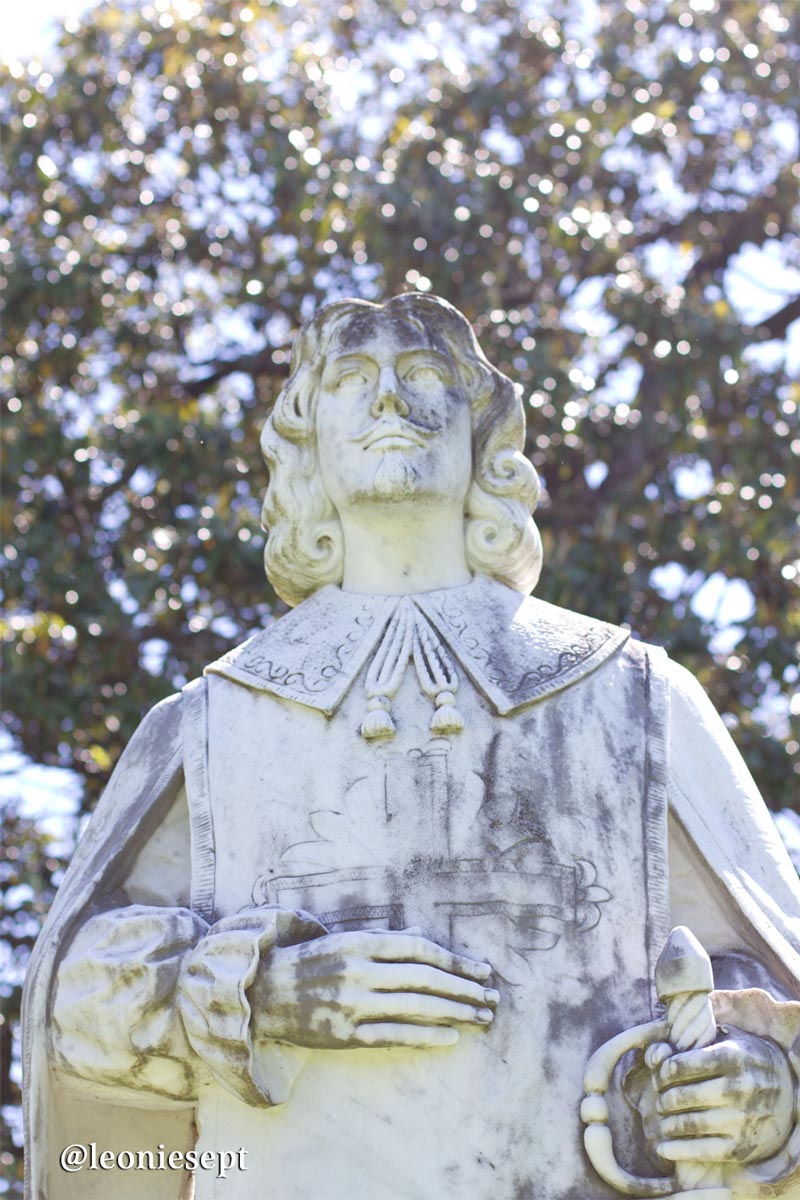
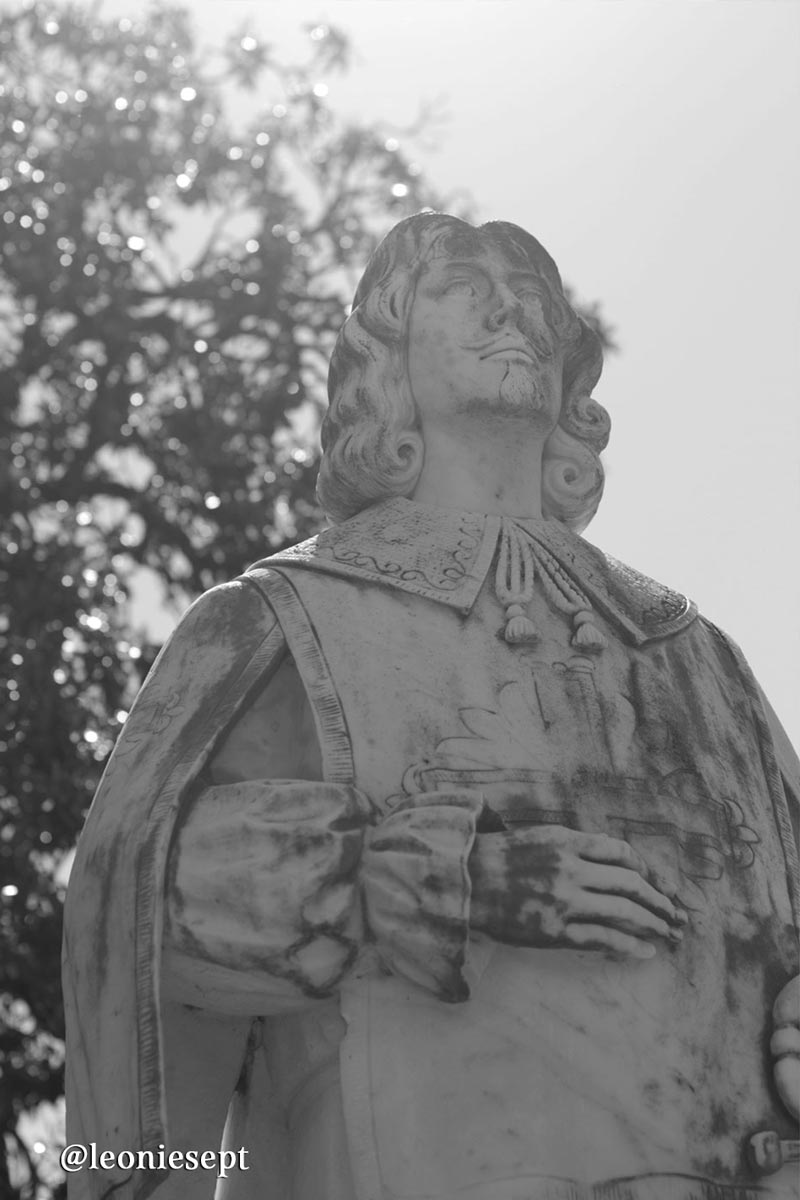
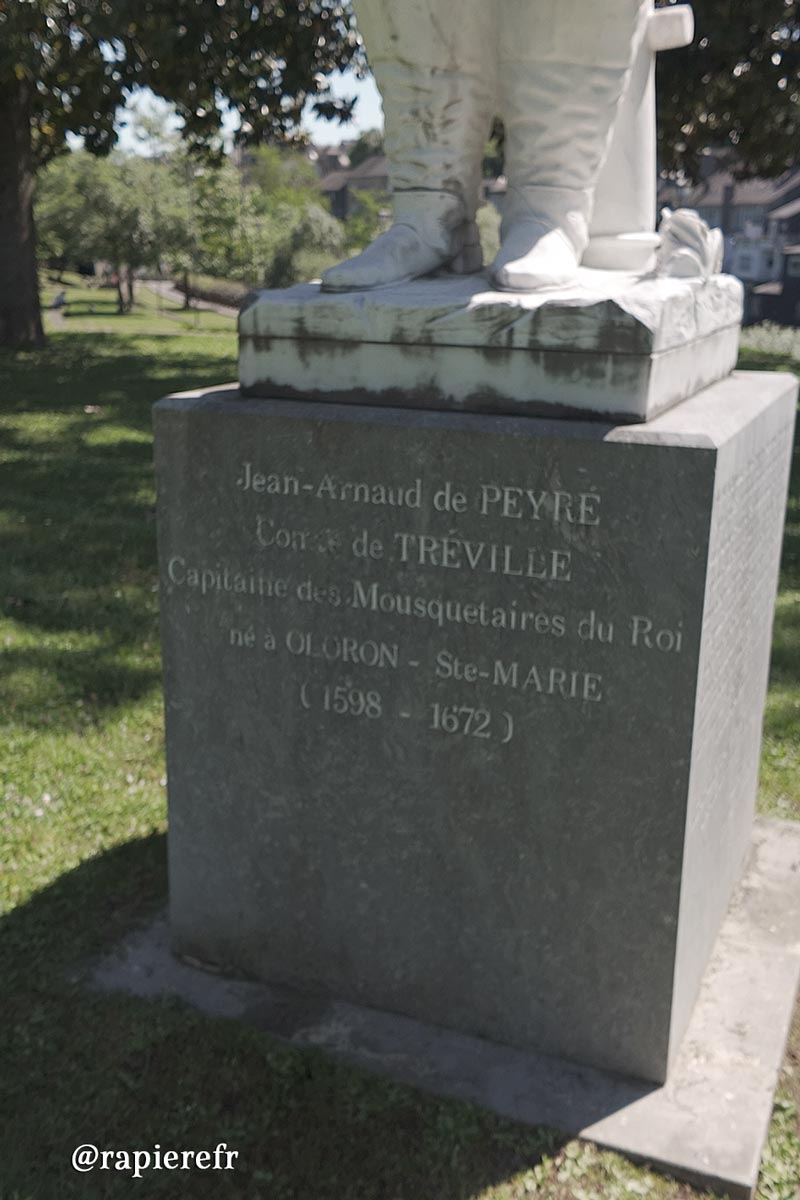
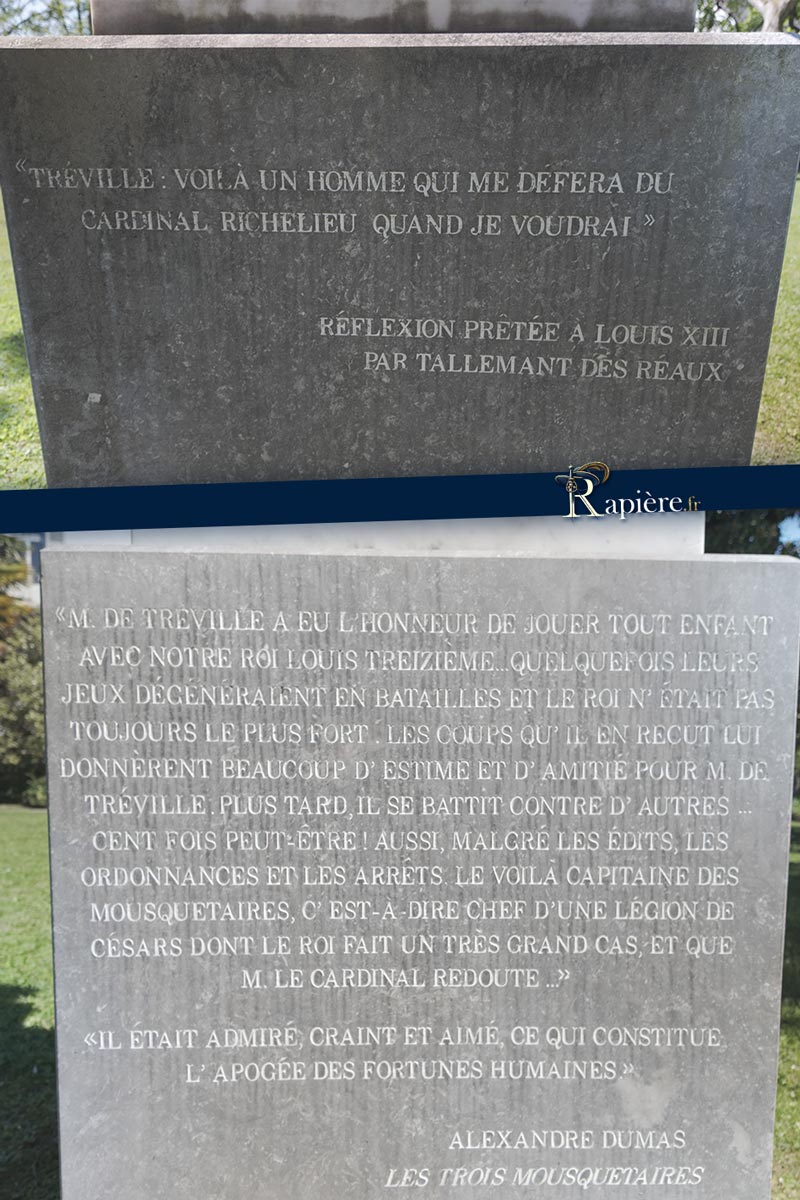
Photo credits: @leoniesept, @rapierefr